
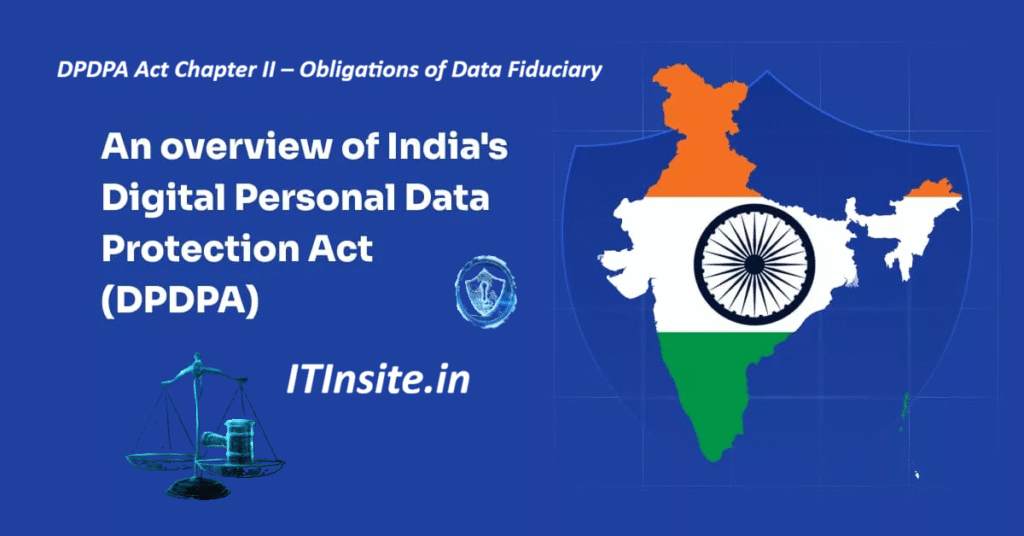

Introduction: Why Chapter I of the DPDPA Act Matters More Than You Think
In today’s digital-first India, personal data is currency. Every app you download, every website you visit, and every online service you use relies on personal information. This makes data protection not just a legal issue, but a daily life concern. That’s exactly where the DPDPA Act Chapter I – Preliminary steps in.
The Digital Personal Data Protection Act, 2023 (DPDPA Act 2023) is India’s landmark law designed to safeguard personal data in the digital ecosystem. Chapter I may look short and simple, but it quietly lays the entire foundation of the Act. Understanding it properly helps businesses, professionals, students, and citizens interpret every other chapter correctly.
In this detailed and easy-to-read guide, we will break down DPDPA Act Chapter I, explain its meaning in plain language, share practical examples, and highlight why this “preliminary” chapter is anything but basic.
DPDPA Act Chapter I – Preliminary: Purpose and Scope Explained
The primary role of DPDPA Act Chapter I – Preliminary is to establish the identity, structure, and reach of the law. It answers four fundamental questions:
- What is the Act called?
- When does it come into force?
- What do key legal terms mean?
- Where and to whom does the Act apply?
Why Chapter I Is Legally Crucial
Courts, regulators, companies, and compliance officers rely heavily on this chapter for interpretation. If a term is unclear elsewhere in the Act, Chapter I becomes the reference point.
👉 Practical Tip:
If you’re drafting a privacy policy or reviewing compliance requirements, always cross-check definitions from Chapter I before making assumptions.
For a broader overview, you can also read our internal guide:
Overview of the DPDPA Act 2023
Short Title and Commencement under DPDPA Act Chapter I
Short Title
- The Act is officially called the Digital Personal Data Protection Act, 2023.
- This short title ensures uniform legal referencing across courts, contracts, and policies.
Commencement
One of the most important features of DPDPA Act Chapter I – Preliminary is how the Act comes into force.
- The Act does not automatically apply from the date it was passed.
- It comes into force on a date notified by the Central Government in the Official Gazette.
- Different provisions may come into force on different dates.
Legal Significance of Phased Commencement
This approach allows the government to:
- Roll out the law in phases
- Prepare digital infrastructure
- Establish the Data Protection Board of India
- Give businesses time to comply
👉 Example:
Consent-related obligations may start earlier, while penalty provisions may be enforced later.
👉 Practical Tip for Businesses:
Track Gazette notifications closely. “Commencement of the Act” may mean different things for different obligations.
Key Definitions under DPDPA Act Chapter I – Preliminary
Definitions are the backbone of any legislation, and the DPDPA Act Chapter I provides clarity by defining essential legal terms.
Important Definitions (Simplified)
Personal Data
Any data about an individual who can be identified, directly or indirectly.
Example: Name, phone number, Aadhaar number, IP address.
Digital Personal Data
Personal data that exists in digital form.
Example: Online banking records, email IDs, app login data.
Data Principal
The individual to whom the personal data relates.
Includes parents or guardians for children or persons with disabilities.
Data Fiduciary
Any person, company, or entity that decides:
- Why personal data is processed
- How personal data is processed
Example: E-commerce platforms, banks, ed-tech companies.
Data Processor
An entity that processes data on behalf of a Data Fiduciary.
Example: Cloud service providers, payroll processing companies.
Processing
Any operation on personal data, such as:
- Collection
- Storage
- Use
- Sharing
- Disclosure
- Erasure or destruction
Consent Manager
A registered entity that enables Data Principals to manage consent digitally.
Personal Data Breach
Any unauthorised or accidental disclosure, loss, or access affecting:
- Confidentiality
- Integrity
- Availability of personal data
Board
The Data Protection Board of India, established under the Act.
Child
Any individual below 18 years of age.
State
As defined under Article 12 of the Constitution of India.
Read Article 12 of the Constitution on the official India Code portal.
Why These Definitions Matter
- Prevent ambiguity
- Avoid misuse of legal terms
- Ensure consistent enforcement across India
👉 Practical Tip:
For compliance audits, always map your organization’s role—Data Fiduciary or Data Processor—using these definitions.
Application of the Act under DPDPA Act Chapter I
Understanding where the law applies is just as important as knowing what it says. DPDPA Act Chapter I – Preliminary clearly outlines its jurisdiction.
Where the Act Applies
Within India
The Act applies if:
- Personal data is collected in digital form, or
- Data is collected offline but later digitised
Outside India (Extra-Territorial Application)
The Act also applies to processing outside India if:
- Goods or services are offered to individuals in India
👉 Example:
A foreign e-commerce website targeting Indian customers must comply with the DPDPA Act 2023.
Where the Act Does NOT Apply (Exemptions)
- Personal or Domestic Use
- Example: Saving contacts on your phone
- Publicly Available Personal Data
- Data made public by the individual, or
- Data disclosed under a legal obligation
Illustration:
If someone voluntarily shares personal details on social media, the Act does not apply to that data.
Significance of the Application Clause
- Protects individual privacy
- Avoids over-regulation of personal activities
- Clarifies jurisdiction for global digital platforms
👉 Practical Tip for Startups:
If you serve Indian users—even from abroad—you should assess DPDPA applicability immediately.
Overall Importance of DPDPA Act Chapter I – Preliminary
Chapter I may be introductory, but its impact is long-lasting. It:
- Sets the legal scope of the DPDPA Act
- Defines core concepts used throughout the law
- Determines jurisdiction and applicability
- Acts as the interpretative base for the entire Act
Without a clear understanding of DPDPA Act Chapter I – Preliminary, compliance efforts can easily go wrong.
🔗 DPDPA Compliance Checklist for Businesses
Final Thoughts: Building Strong Compliance Starts Here
The DPDPA Act Chapter I is not just legal formality—it is the compass guiding India’s data protection framework. Whether you’re a business owner, legal professional, student, or privacy-conscious citizen, mastering this chapter puts you one step ahead in the digital era.
As India moves toward stronger data governance, understanding the DPDPA Act 2023 from the ground up is the smartest way forward. Start with Chapter I, and everything else will fall into place—clearly, confidently, and compliantly. 🚀
Introduction to the Digital Personal Data Protection Act (DPDPA), India

Pingback: Chapter V – Data Protection Board of India: The Ultimate Guide to a Stronger Data Protection Future