

🔐 e-Rupee’s Cybersecurity Posture in India: Building Trust in the Digital Rupee
Introduction : India is rapidly moving toward a digitally empowered economy, and the e-Rupee (Digital Rupee)—issued by the Reserve Bank of India (RBI)—is at the heart of this transformation.
As the country’s official Central Bank Digital Currency (CBDC), the e-Rupee represents the next evolution of money—combining the trust of fiat currency with the efficiency of digital technology. But with innovation comes responsibility, and the cybersecurity posture of the e-Rupee is one of the most critical aspects of its long-term success.
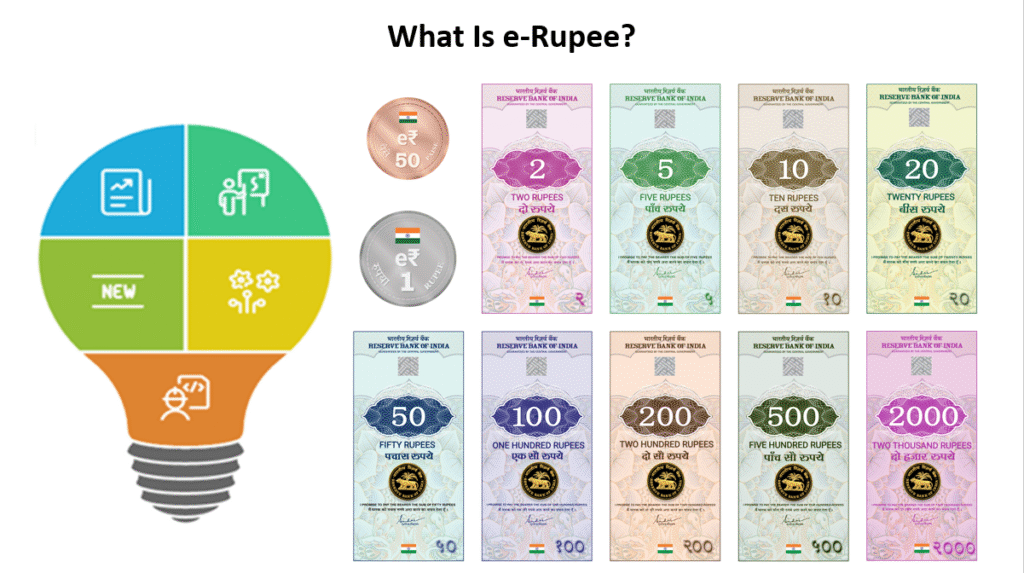
🧩 What Is e-Rupee?
The e-Rupee, also known as the Digital Rupee or CBDC, is a digital version of the Indian Rupee (INR) issued and regulated by the RBI. Unlike cryptocurrencies, the e-Rupee is fully backed by the government and carries the same value as physical cash.
Currently, the RBI has introduced two variants:
- Retail e-Rupee (CBDC-R): For the public and businesses.
- Wholesale e-Rupee (CBDC-W): For banks and large financial institutions.
While the technology promises convenience and transparency, the security of digital money remains a top concern for regulators, institutions, and users alike.
🛡️ RBI’s Cybersecurity Framework for e-Rupee
The RBI has emphasized cybersecurity as the backbone of the Digital Rupee’s implementation. Every participating bank and wallet provider must adhere to RBI’s IT Governance and Cybersecurity Framework (2023–24).
Key Safeguards Include:
- End-to-End Encryption: All e-Rupee transactions are protected by advanced cryptographic encryption.
- Secure Wallet Infrastructure: Authorized banks host wallets under strict compliance standards, with multi-factor authentication and device binding.
- Offline Transaction Safety: Even in offline mode (via Bluetooth or NFC), data packets are encrypted to prevent tampering or double-spending.
- Regular Security Audits: RBI mandates routine audits, penetration testing, and threat modeling to identify vulnerabilities.
- Real-Time Monitoring: Continuous surveillance systems detect suspicious or unauthorized activities instantly.
According to the RBI’s official FAQ (2025), the Digital Rupee operates under a “robust cybersecurity framework” to ensure safe, reliable, and tamper-proof transactions.
⚠️ Key Cybersecurity Challenges
Despite these safeguards, several cybersecurity risks accompany the large-scale rollout of the e-Rupee.
- Increased Attack Surface
With multiple wallet providers, banks, and intermediaries, the system’s ecosystem is vast. Each node presents potential vulnerabilities that hackers could exploit.
- Offline Transaction Risks
Offline functionality is one of e-Rupee’s standout features—but it introduces device-based risks such as cloning, tampering, and local data compromise.
- Privacy vs. Traceability
Balancing user privacy with transaction traceability is delicate. While anonymity encourages adoption, excessive surveillance may raise public concern.
- Third-Party Vendor Risks
Non-bank payment providers and app developers participating in the ecosystem could become weak links if not rigorously monitored.
- Scalability and Resilience
As transaction volumes grow, ensuring server uptime, fraud prevention, and resilience to DDoS attacks becomes critical.
🧠 RBI’s Approach to Strengthening Cybersecurity
The Reserve Bank of India continues to refine its cybersecurity posture through:
- Regulatory Oversight: Strict reporting of cyber incidents and compliance reviews.
- Collaboration with CERT-In: Joint monitoring of cyber threats in real-time.
- Awareness and Training: Promoting digital hygiene and cybersecurity education for end users.
- Cross-Border Security Standards: Exploring collaboration with other central banks for global interoperability and secure remittances.
These measures align with the RBI’s IT Governance Master Directions (2023), which became effective in April 2024.
💡 User Responsibility: Staying Secure with e-Rupee
Cybersecurity is not only a government responsibility—users play an essential role too.
Here’s how you can protect your e-Rupee wallet:
- ✅ Download the official CBDC wallet app only from your bank’s verified source.
- ✅ Enable multi-factor authentication (MFA) for your wallet.
- ✅ Avoid sharing wallet credentials or transaction screenshots.
- ✅ Keep your phone updated with the latest OS and security patches.
- ✅ Report any suspicious activity immediately to your bank’s CBDC helpdesk.
🔍 The Road Ahead: Strengthening India’s Digital Rupee
The e-Rupee’s success depends heavily on maintaining digital trust. As cyber threats evolve, so must India’s defensive strategies, including:
- Integration of AI-driven fraud detection systems.
- Development of zero-trust security frameworks.
- Enhanced data privacy legislation for digital currency use.
- Continuous stress-testing and red-teaming by cybersecurity experts.
By proactively addressing these challenges, the RBI can ensure the e-Rupee becomes a global benchmark for secure digital currencies.
🏁 Conclusion
The cybersecurity posture of the e-Rupee is evolving alongside India’s ambitious financial innovation. With the RBI’s commitment to robust regulation, secure design, and constant monitoring, India’s Digital Rupee is poised to become one of the most secure CBDCs globally.
However, maintaining this trust requires collaboration between regulators, banks, technology providers, and users. In an era where cyber threats are ever-changing, cyber resilience will define the true success of the e-Rupee.
🪙 Introduction About e-Rupee: India’s Digital Currency Revolution

