A detailed SWOT analysis of India’s e-Rupee (Digital Rupee) highlighting its strengths, weaknesses, opportunities, and potential threats.
💬 Top 50 Frequently Asked Questions (FAQs) About e-Rupee (Digital Rupee)
🪙 Basic Understanding
- What is the e-Rupee?
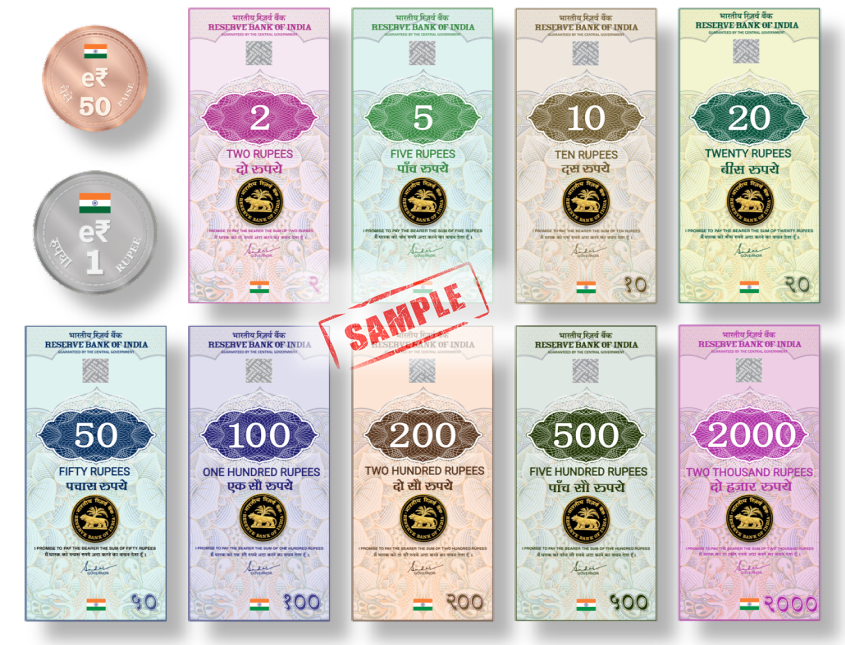
The e-Rupee (Digital Rupee) is India’s official digital currency issued by the Reserve Bank of India (RBI). It’s a Central Bank Digital Currency (CBDC) that holds the same value as physical cash. - Is the e-Rupee the same as cryptocurrency?
No. The e-Rupee is regulated and backed by the RBI, while cryptocurrencies are private, decentralized, and volatile. - Is the e-Rupee legal tender in India?
Yes. The e-Rupee is legal tender, meaning it must be accepted for all payments in India. - Who issues the e-Rupee?
The Reserve Bank of India (RBI) is the sole issuer of the e-Rupee. - What is the full form of CBDC?
CBDC stands for Central Bank Digital Currency.
💡 Purpose and Vision
- Why did the RBI launch the e-Rupee?
To promote digital payments, financial inclusion, and reduce dependency on cash. - How is the e-Rupee different from UPI payments?
UPI transfers bank funds digitally, whereas the e-Rupee itself is the digital form of cash. - What is the goal of introducing the e-Rupee?
To modernize India’s financial system, enhance efficiency, and reduce transaction costs. - Is e-Rupee part of the Digital India initiative?
Yes. The e-Rupee supports the Digital India vision by promoting a cashless and paperless economy. - Does the e-Rupee replace physical cash?
Not yet. It is designed to complement physical cash, not completely replace it.
💼 Availability and Access
- Who can use the e-Rupee?
Currently, users in pilot cities can use it via participating banks. Nationwide rollout is expected soon. - How can I access e-Rupee?
Through the CBDC (e-Rupee) wallet app provided by authorized banks. - Which banks offer the e-Rupee?
As of now, major banks like SBI, ICICI Bank, HDFC Bank, Yes Bank, and IDFC First Bank are part of the pilot. - Where can I download the e-Rupee wallet?
From your participating bank’s app or via official RBI-authorized platforms. - Can both individuals and businesses use it?
Yes, both individuals and merchants can use e-Rupee for payments and transactions.
- How do I load money into my e-Rupee wallet?
By transferring funds from your bank account to your e-Rupee wallet through the app. - How do I make a payment using e-Rupee?
Simply scan a QR code or enter the receiver’s mobile number to transfer money instantly. - Can I send e-Rupee to another person?
Yes, you can make peer-to-peer (P2P) transfers easily using the e-Rupee wallet. - Can I use e-Rupee offline?
Yes. The e-Rupee supports offline payments via Bluetooth or NFC. - How long does a transaction take?
Transactions happen instantly, just like UPI or card payments.
🔐 Security and Privacy
- Is the e-Rupee secure?
Yes. It uses RBI-level encryption and digital ledger technology for full security. - Can e-Rupee be hacked?
While no system is 100% immune, the e-Rupee is designed with advanced cybersecurity measures by the RBI. - Is my personal data safe with e-Rupee?
Yes. Transactions are recorded securely while maintaining user privacy. - What happens if I lose my phone?
Your e-Rupee wallet remains secure since it’s protected by PIN, biometrics, or device encryption. - Does e-Rupee require internet for all transactions?
No. It can also be used in offline mode in certain regions.
💰 Conversion and Value
- How much is 1 e-Rupee worth?
Exactly ₹1 — it holds the same value as physical cash. - Can I convert e-Rupee back to cash?
Yes. You can redeem or deposit your e-Rupee into your bank account anytime. - Are there fees for using e-Rupee?
Currently, there are no extra charges for using e-Rupee. - Can I use e-Rupee for international transactions?
Not yet, but the RBI may explore cross-border payment features in the future. - Can foreign nationals use e-Rupee in India?
Once fully implemented, tourists and foreign visitors may be allowed to use it.
🏦 Technical Details
- Is e-Rupee based on blockchain?
It uses distributed ledger technology (DLT) concepts but is centrally controlled by the RBI. - What are the types of e-Rupee?
There are two types:
- Retail (CBDC-R) – for individuals and merchants.
- Wholesale (CBDC-W) – for interbank transactions.
- What makes e-Rupee different from digital wallets like Paytm or PhonePe?
Unlike wallets, e-Rupee is legal tender, not stored-value. It’s actual money, not just a payment method. - Will e-Rupee work with UPI QR codes?
Yes, RBI plans to integrate e-Rupee with existing UPI QR infrastructure for convenience. - Does e-Rupee earn interest like a bank account?
No. It behaves like cash — non-interest-bearing digital currency.
📊 Economic Impact
- How will e-Rupee benefit India’s economy?
It will reduce cash handling costs, improve transparency, and promote financial inclusion. - Will it help prevent corruption or black money?
Yes. Digital traceability helps curb illegal and unaccounted cash transactions. - How does it help small businesses?
It allows low-cost, instant digital payments without needing internet or POS devices. - Is the e-Rupee eco-friendly?
Yes. It reduces the need for paper, ink, and logistics used in printing physical cash. - Can e-Rupee make cross-border trade easier?
In the future, it could simplify global remittances by eliminating intermediaries.
📱 User Experience
- Is the e-Rupee wallet easy to use?
Yes. The app is designed to be user-friendly and similar to UPI wallets. - Do I need a bank account to use e-Rupee?
Initially, yes — but in the future, unbanked users may also access it through verified digital IDs. - Can I use e-Rupee on any smartphone?
Yes, it works on most Android and iOS smartphones. - Is there a limit to how much e-Rupee I can hold?
Yes, RBI may set transaction and holding limits for security and monetary control. - What if my transaction fails?
You can retry or contact your bank’s CBDC support team for quick resolution.
🔮 Future and Expansion
- When will e-Rupee launch across India?
Full rollout is expected within the next few years after successful pilot testing. - Will it replace UPI in the future?
No. The e-Rupee and UPI will coexist and complement each other. - Can e-Rupee be used for government benefits or subsidies?
Yes. The government plans to use it for direct benefit transfers (DBTs) in the future. - Is the e-Rupee unique to India?
No. Many countries like China (e-CNY) and Bahamas (Sand Dollar) have similar digital currencies. - What is the future of e-Rupee in India?
It is set to transform India’s payment ecosystem, enabling faster, secure, and inclusive digital transactions for everyone.